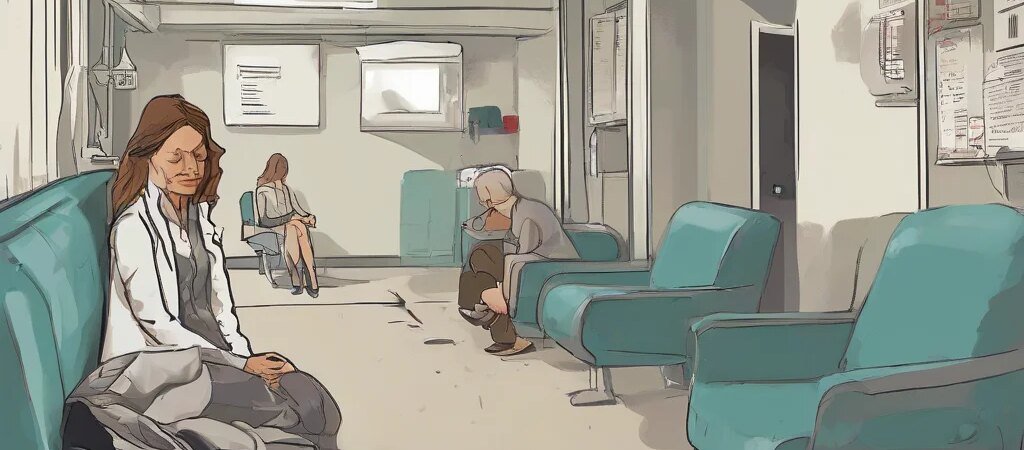
There is a peculiar gravity to a waiting room. It is a liminal space — a place of prolonged pauses, held breaths, strangers sitting shoulder to shoulder, each carrying invisible burdens. In clinics and doctor’s offices across the world, waiting rooms serve as the backdrop for some of the most raw, unfiltered moments of the human experience: fear and hope, patience and frustration, despair and relief.
The Waiting Room Chronicles: Stories from the Clinic seeks to explore these moments, offering a tapestry of narratives that reveal more than just health concerns — they reveal life itself.
The Anatomy of Pause
At first glance, a clinical waiting room might appear mundane. Plastic chairs arranged in rows, outdated magazines stacked on side tables, a reception window with a sliding glass partition. But look closer. Read the body language. There is the young father bouncing his knee rhythmically, his toddler asleep in his lap, a small forehead bandage visible under a baseball cap. There is the elderly woman clutching a folder thick with medical records that have outlasted friendships. There is the college student staring at their phone, not because they are looking at it, but because they cannot meet the eyes of anyone else in the room without admitting why they are here.
The waiting room erases social hierarchies. The executive sits beside the janitor. The professor shares a magazine with the mechanic. Status dissolves when the call comes — “the doctor will see you now.”
The Silent Conversations
One of the most compelling aspects of the clinic waiting room is the silence — and the almost-silent conversations happening within it. There are no words passed between most patients, yet an unspoken understanding binds them. We exchange the briefest of glances when a name is called too loudly. We instinctively look away when someone’s hands tremble too visibly. We nod almost imperceptibly when another person sits down, reading the same pamphlet we just finished — the one about test results or treatment options or what to ask your doctor.
In these shared silences, there is a strange form of community. An invisible fellowship of vulnerability.
The Receptionist: Guardian of the Threshold
Behind every waiting room stands an unsung narrator — the receptionist. They are the first and last point of human contact. They process insurance cards that mean nothing when your hands are shaking. They repeat the same waiting times, the same forms, the same small directions: “Second door on the left.” They see the tears that fall before the strength returns. They are often the ones who personally hand off a prescription or offer a kind word just before the glass window closes.
Every Waiting Room Chronicle has a chapter dedicated to them — the guardians of the threshold — whose empathy shapes the entire experience before a single diagnosis is delivered.
Stories That Resonate
The most powerful waiting room stories are not dramatic. They don’t involve emergencies or plot twists. They are quiet tales of resilience. A woman who brings homemade cookies for the staff every visit — not because she is grateful, but because her late wife always did. A teenager who finally asks, in a waiting room, for help they’d been too scared to seek at home. A veteran who has sat in the same chair for years, guarding the memory of the doctor who sat across from him and listened, truly listened, during the darkest chapter of his life.
These stories remind us that health is not merely the absence of disease — it is woven into every social interaction, every kindness, every moment of being truly seen by another human being.
The Clock on the Wall
Time moves differently in a waiting room. The clock ticks louder there than anywhere else. Each minute stretches, bends, collapses into eternity. An hour feels like a day; a day like a season. And in that suspended time, the mind wanders. It wanders to the “what ifs” and the “what nexts.” To the faces of loved ones waiting at home. To the drive back, and what will be said — or not said — when the car door closes.
The clock on the wall is both a torture device and a promise. It is the slow confirmation that eventually, your name will be called. That the next chapter will begin.
Conclusion
The Waiting Room Chronicles: Stories from the Clinic is not a book about medicine. It is a book about people. It is a testament to the resilience, vulnerability, and quiet courage of individuals navigating one of life’s most universal experiences — waiting for care. It honors the waiting room not as a place of dread, but as a sanctuary of shared humanity. Because in that humble, anxious space, we are reminded of something profound: that we are not alone in our uncertainty, that the person beside us may carry a similar weight, and that the simple act of being there, together, is its own form of healing.