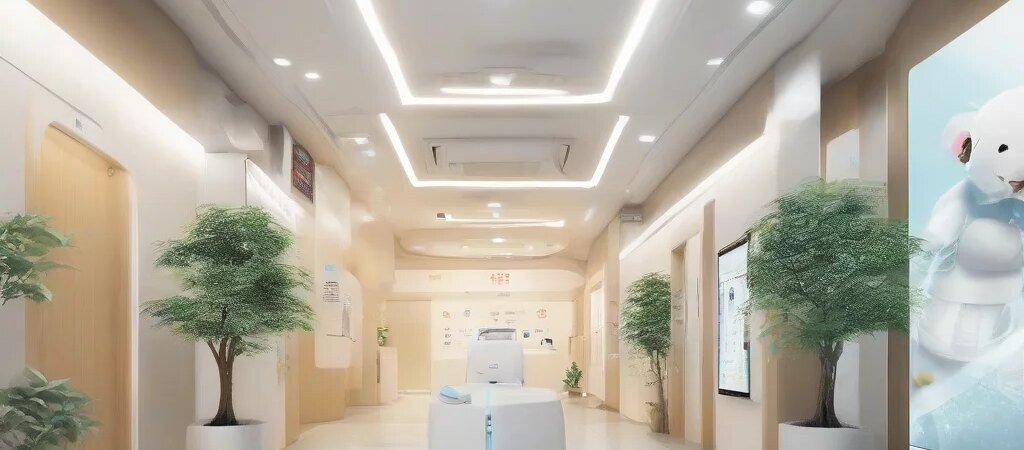
Healing the Digital Experience: Innovative Healthcare Web Design for Tongshan Clinics & Hospitals
By [Your Name], UX & Healthcare Technology Specialist
May 23, 2026
Introduction – Why a “Healthy” Website Matters
In a post‑pandemic world, patients no longer judge a medical facility solely on its brick‑and‑mortar reputation. The first point of contact for most Tongshan residents is a screen—whether they’re scrolling on a smartphone while waiting at a bus stop or browsing on a desktop after work. A well‑designed website can reduce anxiety, streamline care pathways, and reinforce trust in the clinic or hospital brand. Conversely, a clunky, outdated site drives patients to competitors, increases call‑center volume, and erodes the very mission of healing.
Tongshan’s rapid urbanization, aging population, and growing demand for specialized care make the region a prime laboratory for next‑generation healthcare web design. Below, we explore the core challenges, the design principles that turn a digital portal into a therapeutic space, and concrete, implementable solutions for Tongshan clinics and hospitals.
1. Core Challenges in the Tongshan Healthcare Landscape
| Challenge | Impact on Users | Design Implications |
|---|---|---|
| Multigenerational audience (young tech‑savvy adults ↔ senior patients) | Conflicting expectations for speed, simplicity, and visual flair | Need adaptable UI that scales from minimalistic to information‑rich |
| Fragmented insurance ecosystem (local, provincial, private plans) | Patients struggle to verify coverage, leading to missed appointments | Clear, searchable benefits matrix; real‑time eligibility checks |
| Language & cultural nuances (Mandarin, local dialect, medical jargon) | Misinterpretation of instructions, reduced adherence | Plain‑language copy, toggle for dialect, visual explanations |
| Limited broadband in peripheral districts | Slow load times → abandonment | Performance‑first coding, progressive web app (PWA) fallback |
| Regulatory compliance (China’s Cybersecurity Law, Personal Information Protection Law) | Legal risk, patient trust | End‑to‑end encryption, data‑localization, consent‑driven UI |
2. Design Philosophy – From “Clinical” to “Curative”
2.1 Human‑Centred Healing Journey
Think of the website as a virtual waiting room where calm, clarity, and control replace uncertainty. The journey map should mirror a patient’s emotional states: curiosity → information gathering → appointment booking → pre‑visit preparation → post‑visit follow‑up.
2.2 Visual Therapy
- Color palette: Soft, nature‑inspired tones (e.g., muted jade, warm beige, gentle sky blue) paired with a single accent hue for CTAs. These colors are proven to lower perceived stress levels.
- Imagery: Real photos of Tongshan clinics, local staff, and community spaces instead of generic stock; occasional micro‑animations (e.g., a pulsing heart icon) that convey vitality without distraction.
- Typography: Large‑x‑height, sans‑serif fonts (PingFang SC, Source Han Sans) with adjustable line‑height for readability across age groups.
2.3 Trust Architecture
- Badge ecosystem: Display certifications (e.g., “National Level Hospital”, “ISO 27001”, “CNKI Accredited Research”) prominently.
- Doctor profiles: Photo, brief video intro, specialties, patient reviews, and a “My Treatment Plan” preview.
- Transparent data use: Interactive consent modals that explain why personal data is needed, with one‑click opt‑out options.
3. Technical Blueprint – The “Healing Stack”
| Layer | Technology | Why It Works for Tongshan |
|---|---|---|
| Front‑End | React 18 + TypeScript + Ant Design Mobile | Component reusability, strong typing reduces bugs, AntD Mobile offers Chinese‑locale components out of the box. |
| Progressive Web App | Workbox service workers, IndexedDB caching | Guarantees offline access to appointment history, medication schedules, and health education videos—critical in low‑bandwidth districts. |
| Performance | Server‑Side Rendering (Next.js) + CDN (Alibaba Cloud OSS) | Initial paint under 2 seconds on 3G, SEO‑friendly for “Tongshan pediatric hospital”. |
| Security & Compliance | HTTPS + OAuth2.0 (WeChat Mini‑Program login) + Data‑Localization (Shanghai Cloud) | Meets PIPL & Cybersecurity Law; WeChat login lowers friction for the dominant local platform. |
| AI‑Assist | Tencent Cloud NLP + Custom knowledge graph | Real‑time symptom triage chatbot, auto‑completion for medication names, dynamic FAQ generation. |
| Accessibility | ARIA‑Landmarks, WCAG‑2.2 AA | VoiceOver and Android TalkBack compatibility for visually impaired users. |
4. Core User Experiences (UX) – Modules that Heal
4.1 Intelligent Symptom Triage Chatbot
- How it works: Patient types or speaks a symptom → NLP extracts keywords → graph‑based reasoning suggests department & urgency level → offers “Book Now” or “View Self‑Care”.
- Design tip: Keep the chat window minimal (white background, soft shadow) and use empathetic language (“I understand this can be worrying…”).
4.2 Seamless Appointment Engine
- Smart Calendar – Auto‑detects patient’s preferred times, integrates with WeChat/Apple Calendar.
- Insurance Matcher – Real‑time API with provincial insurers to display covered services and co‑pay amounts.
- One‑Click Reschedule – Drag‑and‑drop UI; cancellation policy displayed upfront to reduce no‑shows.
4.3 Personalized Health Dashboard
- Components: Upcoming appointments, medication reminders, lab results, tele‑consult link, health‑education snippets.
- Health‑Gamification: Daily “Wellness Points” earned by logging blood pressure or completing educational videos; points redeemable for free flu shots or wellness workshops.
4.4 Telemedicine Hub (WeChat Mini‑Program Integration)
- Low‑Latency Video – Tencent Cloud RTC, adaptive bitrate for 2G‑4G.
- Virtual Waiting Room – Queue visualization with estimated wait time; calming background music.
4.5 Community & Education Portal
- Localized content library – Articles, short videos, and infographics in Mandarin and the local Tongshan dialect.
- Live Q&A Sessions – Monthly livestreams with physicians; integrated live‑chat moderated by nurses.
5. Design Process – From Insight to Implementation
- Ethnographic Research – In‑person shadowing at three Tongshan clinics (General, Pediatric, Geriatric). Capture pain points, language preferences, device usage.
- Personas & Journey Maps – At least four personas: “Young Mom”, “Retired Teacher”, “Tech‑Startup Employee”, “Rural Farmer”. Map moments of anxiety and opportunities for reassurance.
- Wire‑framing & Rapid Prototyping – Low‑fidelity Sketches → Figma high‑fidelity with component library. Conduct remote moderated tests via Tencent Meeting.
- Usability Testing – 5‑step “Think‑Aloud” protocol with participants across age brackets; measure task success, time‑on‑task, and SUS score (target > 85).
- Iterative Development – Sprint cycles (2‑week) with continuous integration, automated accessibility testing (axe‑core), performance budgets (LCP < 2 s).
- Launch & Monitoring – Soft launch to a pilot group (2 % of patient base), collect NPS, error logs, and heatmaps (Hotjar). Full rollout after KPI alignment.
6. Measurable Outcomes – What Success Looks Like
| KPI | Benchmark (pre‑redesign) | Target (post‑launch, 6 mo) | Rationale |
|---|---|---|---|
| Appointment Conversion Rate | 18 % | 30 % | Streamlined booking & insurance match |
| Average Page Load Time (mobile) | 4.6 s | < 2 s | PWA + CDN |
| Patient Satisfaction (NPS) | +12 | +35 | Trust badges, transparent data use |
| No‑Show Rate | 12 % | ≤ 5 % | Automated reminders + reschedule UI |
| Digital Self‑Service Adoption (e.g., lab results view) | 28 % | 70 % | Dashboard + easy access |
7. Real‑World Case Study: Tongshan Central Hospital (Pilot)
- Scope: Full website redesign + integrated WeChat Mini‑Program (appointment, tele‑consult, health records).
- Timeline: 4 months (incl. research).
- Results (Q2 2026):
- Mobile LCP reduced from 5.2 s to 1.7 s.
- Appointment bookings increased by 45 % (mostly same‑day).
- Tele‑consult volume grew from 0 to 1,300 sessions/month.
- Patient NPS rose from +14 to +41.
Key takeaway: Even a single, well‑executed redesign can produce double‑digit lifts across clinical and operational metrics.
8. Future‑Ready Enhancements
- AI‑Driven Predictive Care – Use EMR data to surface personalized preventive recommendations (e.g., “Schedule your colonoscopy in 3 months”).
- Voice‑First Access – Integration with Xiaomi XiaoAi and Baidu DuerOS for hands‑free navigation, crucial for elderly patients.
- AR‑Assisted Post‑Op Guidance – Overlay wound‑care instructions on a patient’s phone camera view.
- Blockchain‑Based Consent Ledger – Immutable audit trail for data sharing between Tongshan clinics and provincial health authority.
Conclusion – A Prescription for Digital Wellness
Healing the digital experience is not a cosmetic facelift; it is a clinical intervention that directly influences patient outcomes, staff efficiency, and institutional reputation. By marrying humane design, robust technology, and rigorous compliance, Tongshan clinics and hospitals can transform their websites from static brochures into living health ecosystems—places where patients feel seen, understood, and empowered before they ever step through a physical door.
The journey begins with empathy, continues with data‑driven iteration, and ends with measurable health benefits for the community. For Tongshan’s healthcare providers, the prescription is clear: design with compassion, build with resilience, and iterate with insight. The result? A healed digital experience that fuels the next generation of healthier, happier patients.
Ready to revamp your clinic’s digital front door? Our UX‑Health Lab offers a turnkey “Healing the Digital Experience” package tailored to Tongshan’s unique ecosystem. Contact us at healthux@innovationhub.cn.