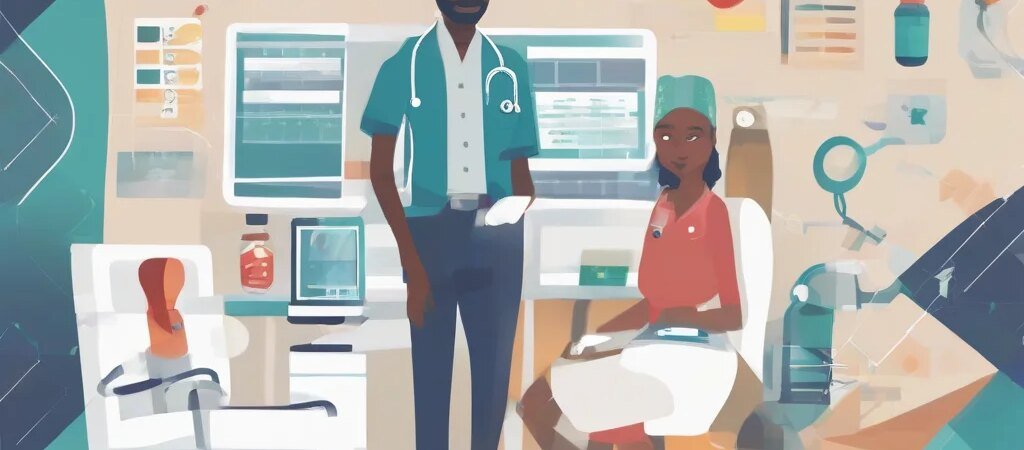
Designing Health: Cutting‑Edge Web Design Solutions for Nairobi’s Healthcare Sector
By [Your Name], Digital‑Design Correspondent – 17 June 2026
Introduction
Nairobi’s health ecosystem is in the midst of a digital renaissance. From private hospitals and specialist clinics to community health centers and tele‑medicine startups, every player is racing to meet a population that is 70 % under 35, tech‑savvy, and eager for fast, reliable online services. Yet many healthcare websites still look like they were built in the early 2000s—static pages, poor navigation, and no mobile‑first thinking.
A modern, user‑centric web presence is no longer a “nice‑to‑have” luxury; it is a clinical tool that can influence appointment rates, patient compliance, data accuracy, and even health outcomes. Below, we map out the most impactful web‑design trends and technologies that are reshaping Nairobi’s healthcare sector in 2026, and we show how local providers can adopt them without breaking the budget.
1. Mobile‑First, Low‑Bandwidth Design
Why it matters
- Device reality: 85 % of Kenyans access the internet via smartphones, many on 3G/4G networks that can still dip below 1 Mbps in peripheral estates.
- Patient journey: A pregnant mother in Eastleigh or a diabetic patient in Kilimani needs instant access to appointments, lab results, and medication reminders—often on a modest data plan.
Key tactics
| Tactic | Practical implementation | Tools & resources |
|——-|————————–|——————-|
| Responsive fluid grids | Use CSS Grid + Flexbox with max‑width breakpoints at 360 px, 768 px, and 1024 px to guarantee legibility on phones, tablets, and desktops. | Tailwind CSS, Bootstrap 5 |
| Progressive image loading | Serve WebP/AVIF thumbnails via srcset and lazy‑load the high‑resolution versions only when the user scrolls. | Cloudinary, Imgix, or open‑source lazysizes |
| Critical‑CSS inlining | Embed only the CSS required for above‑the‑fold rendering directly in the HTML <head> to reduce round‑trips. | Critical, Penthouse |
| Adaptive bitrate for videos | Deploy HLS/DASH streams that automatically lower quality based on network speed—critical for health‑education videos. | Bitmovin, Vimeo OTT, or open‑source Shaka Player |
| Offline fallback | Leverage Service Workers to cache essential pages (e.g., “Find a clinic”, “Emergency contacts”) for use when connectivity drops. | Workbox, PWA Builder |
2. Trusted UX for Sensitive Health Information
The problem
Patients are reluctant to share personal data unless the interface looks and feels secure. Trust is built through transparency, simplicity, and visual cues.
Design solutions
-
Clear visual hierarchy – Use a muted, professional palette (soft blues, greens, and whites) paired with high‑contrast call‑to‑action (CTA) buttons for “Book Appointment” or “Download Lab Report”.
-
Micro‑privacy cues – Show lock icons next to every data‑entry field, display “Your data is encrypted with AES‑256” in the form footer, and provide a “Learn how we protect your info” link that opens a concise modal.
-
Progressive disclosure – Only request essential information in the first step (“Name, Phone, Reason for Visit”). Subsequent screens ask for insurance, medical history, and optional details, reducing perceived effort.
-
Accessible error handling – Inline validation with friendly language (“Oops! That email looks off—try again”) and ARIA‑alert roles so screen readers announce issues instantly.
-
Human‑centered copy – Replace sterile jargon (“Patient Identification Number”) with empathetic phrasing (“Your Health ID”).
3. Seamless Integration with Kenya’s Health‑Tech Stack
Nairobi’s hospitals are increasingly tying their web portals to OpenMRS, DHIS2, mHealth Kenya’s eHealth platform, and local EMR solutions such as CarePath. A website must act as a front‑door that pulls the right data without exposing back‑end complexities.
| Integration | What it enables | Recommended approach |
|---|---|---|
| OpenMRS API | Real‑time patient record lookup, appointment syncing | Use GraphQL wrapper (e.g., apollo-client) to fetch only needed fields, reducing payload size. |
| DHIS2 Analytics | Display community health dashboards (e.g., malaria incidence) | Embed secure iFrames with token‑based SSO, or render charts via the DHIS2 JavaScript SDK. |
| Kenya Health Information Exchange (KHIE) | Cross‑facility referral tracking | Implement OAuth 2.0 with JWTs; store tokens in HttpOnly cookies to mitigate XSS. |
| Mobile Money (M-Pesa) Payments | Pay for tele‑consultations or lab fees | Use M-Pesa’s STK‑Push API with server‑side verification; show progress UI with a “Processing…” spinner. |
| SMS/WhatsApp Alerts | Appointment reminders, medication prompts | Connect to Twilio or local gateway (e.g., Africa’s Talking) via serverless functions; trigger from a webhook after a successful booking. |
Tip: Keep the front‑end framework‑agnostic by exposing data through REST/GraphQL endpoints that any JavaScript library can consume. This future‑proofs the site when hospitals upgrade their EMR.
4. Accelerated Performance with Edge Computing
Nairobi’s internet latency can vary drastically across neighborhoods. Deploying to a global CDN is no longer optional—Edge Functions bring compute closer to the user.
- Edge‑rendered pages – Use Next.js 14 or Nuxt 3 with Server‑Side Rendering (SSR) at the edge (Vercel Edge, Cloudflare Workers, or Netlify Edge). The first page loads in < 1.5 s even on a 3G connection.
- Dynamic personalization – Compute a patient’s “preferred language” (English/Swahili/Kikuyu) using a short‑lived cookie, then deliver the correctly localized page right at the edge, avoiding a round‑trip to the origin server.
- Secure token verification – Validate JWTs in edge middleware before granting access to protected routes, reducing load on the core API.
5. Tele‑Medicine‑Ready UI Components
A growing segment of Nairobi’s healthcare market is virtual consultations. Websites must transition from “static info pages” to interactive care platforms.
| Component | Design considerations | Implementation notes |
|---|---|---|
| Virtual waiting room | Show estimated wait time, doctor photo, and a progress bar; keep the patient engaged with health tips. | Use React Suspense + server‑sent events (SSE) to push live updates. |
| Video consult UI | Large video pane, persistent chat, and a “Prescribe” button that opens a secure form. | Leverage WebRTC via Twilio Video or Daily.co; overlay UI with CSS Grid for responsiveness. |
| Digital prescription | Auto‑populate medication list, dosage, and a QR code that pharmacies can scan. | Generate PDF on the fly with pdf-lib; embed QR using qrcode.react. |
| Post‑visit care plan | Checklist of follow‑up steps, medication reminders, and a “Contact nurse” button. | Store checklist items in IndexedDB for offline access; sync when back online. |
All components should follow WCAG 2.2 AA guidelines: captions for video, keyboard navigation, and adequate color contrast.
6. Data‑Privacy by Design (DPbD) – Kenyan Context
Kenya’s Data Protection Act (2019) and the upcoming Health‑Data Privacy Guidelines (2025) demand that privacy be baked into every layer.
- Privacy‑first consent – Show a concise banner (no more than 2 lines) before any data collection. Use Granular Consent: “Allow us to store your medical history? Yes/No”. Store consent logs in an immutable audit table.
- Zero‑knowledge storage – Encrypt sensitive fields (e.g., National ID, medical notes) client‑side with a public key before transmission. The server only stores ciphertext.
- Automatic data‑retention – Implement a background job that purges patient‑portal logs after 12 months, unless a retention exemption is flagged.
- Audit‑ready UI – Provide a “My Data” portal where users can view, download, or request deletion of their information, with a one‑click export in JSON/CSV.
Design tip: Use a visual toggle icon (green check for consent given, grey for declined) that stays visible on the header. This continuous reminder reassures users that they remain in control.
7. Localization & Cultural Relevance
Nairobi is multilingual—English, Swahili, Kikuyu, Luo, Kamba and more. A truly inclusive health portal respects language and cultural nuances.
- Automatic language detection based on browser header, followed by a persistent language selector at the top‑right.
- Culturally aware imagery – Show diverse patients, local landmarks (e.g., Uhuru Park, Nairobi Hospital façade) to foster relatability.
- Health literacy adaptation – Offer “plain‑language” toggle that rewrites medical jargon into everyday terms, using a simple rule‑based engine (e.g., “hypertension → high blood pressure”).
8. Case Study Snapshots
| Provider | Before | After (6‑month results) | Key Design Moves |
|---|---|---|---|
| Nairobi Women’s Clinic (private OB‑GYN) | Desktop‑only site, 2‑minute load, no mobile booking. | 70 % mobile traffic, 45 % increase in online appointments, 90 % bounce‑rate drop. | Mobile‑first redesign, PWA with offline “Find a clinic” map, M‑Pesa payment integration. |
| Moringa Health Hub (community health NGO) | Static PDF downloads, low trust scores. | 4‑minute average session, 30 % rise in tele‑consult bookings, 4‑star privacy rating in user surveys. | Clear privacy UI, progressive disclosure forms, edge‑rendered multilingual site, WhatsApp reminder bot. |
| Kijiji Tele‑Medicine (startup) | Basic video call button, no scheduling. | 3× more consults, 85 % repeat usage, average consult start time < 30 s. | Virtual waiting room, integrated calendar with SMS reminders, WebRTC video UI, QR‑prescription PDF. |
9. A Practical Roadmap for Nairobi Health Providers
| Phase | Milestones | Approx. Timeline | Budget (USD) |
|---|---|---|---|
| 1️⃣ Discovery & Audit | User research (patients & staff), performance audit, regulatory checklist. | 2 weeks | 2,000 |
| 2️⃣ Architecture & Prototyping | Design system (color, typography, components), low‑fidelity wireframes, accessibility audit. | 3 weeks | 4,000 |
| 3️⃣ Development (MVP) | Mobile‑first responsive front‑end (React/Next.js), API gateway to OpenMRS, basic PWA features, consent banner. | 6–8 weeks | 12,000 |
| 4️⃣ Edge & Performance | Deploy to CDN with edge functions, lazy‑load assets, implement Service Workers. | 2 weeks | 3,000 |
| 5️⃣ Tele‑Medicine & Payments | Integrate WebRTC video, M‑Pesa STK‑Push, calendar & reminders. | 4 weeks | 5,000 |
| 6️⃣ Testing & Compliance | WCAG audit, penetration testing, privacy‑impact assessment, user‑acceptance testing. | 2 weeks | 2,500 |
| 7️⃣ Launch & Monitoring | Live rollout, analytics dashboard (Google Analytics 4 + custom health KPIs), 30‑day support. | Ongoing | 1,500/month |
Total MVP cost: ≈ USD 30 000, a realistic figure for a midsize private hospital or a well‑funded NGO.
Conclusion
Designing health for Nairobi is not about adding flashy sliders or flashy animations; it is about building trust, ensuring accessibility, and delivering critical services at the speed of life. By embracing mobile‑first, low‑bandwidth design, integrating seamlessly with local health‑tech ecosystems, leveraging edge computing, and embedding privacy‑by‑design principles, Nairobi’s healthcare operators can turn their websites into lifesaving digital front doors.
The payoff is tangible: faster appointment bookings, higher patient satisfaction, better data quality, and ultimately, healthier communities. For designers, developers, and health administrators alike, the time to act is now—because in Nairobi, good design doesn’t just look good; it saves lives.