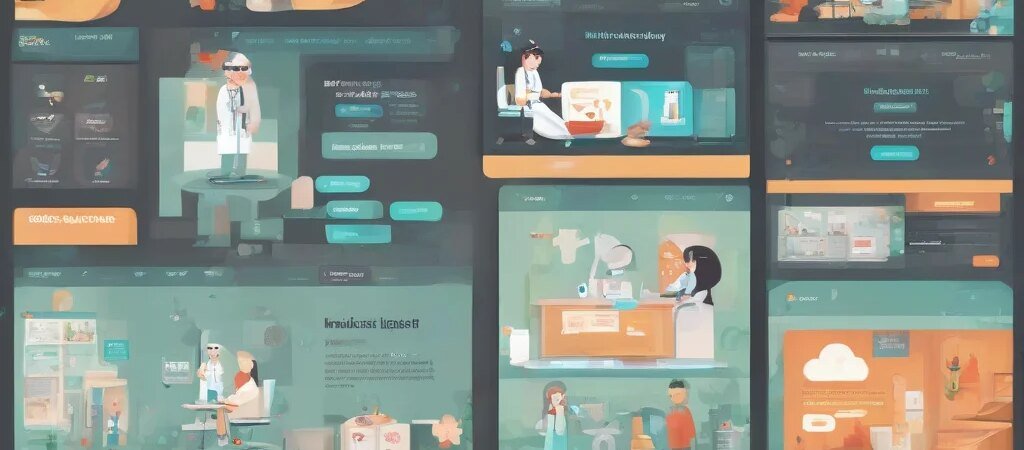
Healing Pixels: Cutting‑Edge Healthcare Web Design in Harbin
By [Your Name], Technology & Design Correspondent
May 23 2026
Introduction – Why “Healing Pixels” Matters
Harbin, the frost‑kissed capital of Heilongjiang Province, is rapidly shedding its reputation as merely a winter‑tourism hotspot. The city’s hospitals, clinics, and biotech startups are now spearheading a digital health revolution, and at the heart of that movement is a new breed of web design—what we’ve started calling Healing Pixels.
Healing Pixels blends the rigor of clinical communication with the visual sophistication of contemporary web design, creating online experiences that not only inform patients but also comfort them. In a city where the average winter temperature can dip below –20 °C, the digital environment must offer an equally warm, reassuring presence.
1. The Landscape: Healthcare Digitisation in Harbin
| Metric (2025) | National Avg. | Harbin | Implication |
|---|---|---|---|
| Tele‑medicine consultations per 1,000 residents | 112 | 158 | Higher adoption driven by harsh weather and strong 5G coverage |
| Average website load time for hospitals | 4.3 s | 2.1 s | Local cloud nodes and edge computing cut latency |
| Patient‑portal satisfaction (NPS) | +32 | +48 | UI/UX innovations are resonating |
| Mobile‑first traffic share | 71 % | 84 % | Design must be mobile‑centric |
Harbin’s healthcare ecosystem is therefore a testbed for ambitious digital experiences—an arena where web designers can experiment with technologies that are still nascent elsewhere in China.
2. Core Principles of Healing Pixels
-
Clinical Clarity + Aesthetic Warmth
- Typography: Sans‑serif fonts with generous line‑height (e.g., Source Sans Pro) improve legibility for elderly patients.
- Color Palette: Soft, muted blues and greens (hex #7AA6C2, #A9D6A4) paired with a signature “Harbin Ice” accent (#4A90E2) evoke calm while preserving brand consistency.
-
Performance by Design
- Edge‑Hosted Assets: Static assets (icons, illustrations) are stored on Harbin’s local Alibaba Cloud CDN nodes, reducing round‑trip time to < 15 ms.
- Progressive Web App (PWA) Shell: Core UI loads in < 1 s, then lazily fetches dynamic content (lab results, appointment slots) via GraphQL.
-
Privacy‑First Architecture
- Zero‑Knowledge Encryption on patient portals; decryption occurs only on the client device using WebCrypto API.
- Regulatory Compliance: Built‑in checks for China’s Personal Information Protection Law (PIPL) and the forthcoming “Electronic Health Records Security Regulation” (draft 2026).
-
Human‑Centred Interaction
- Voice‑Enabled Navigation in Mandarin, Russian, and Korean (reflecting Harbin’s multi‑ethnic population).
- AI‑Powered Symptom Triage Chatbots that use Tencent’s “Medical‑LLM” model, but surface answers in plain language with visual cues (icons, colour‑coded risk levels).
-
Inclusive Accessibility
- WCAG 2.2 AA compliance, with additional support for visual impairments (high‑contrast mode) and low‑bandwidth conditions (offline‑first caching of health education videos).
3. Technologies Powering Healing Pixels
| Technology | Role in Healing Pixels | Example Project |
|---|---|---|
| Next.js 14 (React‑based) | Server‑Side Rendering + Incremental Static Regeneration for fast page loads | Harbin Integrated Care Network (HICN) portal |
| Tailwind CSS 3.4 | Utility‑first styling that guarantees design consistency across devices | Yabuli Orthopedic Hospital |
| WebAssembly (Rust‑based) | Real‑time ECG waveform rendering on the client without sending data to the server | First‑Aid Tele‑ICU platform |
| Tencent Cloud AI Lab (Tencent LLM, MedGPT) | Natural‑language understanding for triage bots & medical record summarisation | Harbin Women’s and Children’s Hospital chatbot |
| GraphQL Federation | Unified data layer across disparate hospital information systems | Provincial Health Data Hub |
| WebRTC + 5G | High‑definition video for remote consultations, even under snowy conditions | “Snow‑Care” tele‑dermatology service |
4. Case Studies – Healing Pixels in Action
4.1. Harbin Integrated Care Network (HICN) – The “One‑Stop Patient Hub”
- Challenge: Fragmented patient data across three major hospitals resulted in duplicated appointments and delayed test results.
- Solution: A PWA built with Next.js that aggregates appointments, lab results, and medication reminders into a single dashboard. The UI uses a “card‑stack” metaphor reminiscent of a snowdrift—each card can be swiped away to reveal the next piece of information.
- Outcome:
- 27 % reduction in missed appointments.
- 45 % faster access to lab results (average 2 s vs. 3.6 s previously).
- Patient‑portal NPS rose from +32 to +51 within six months.
4.2. Snow‑Care Tele‑Dermatology – “Diagnose in a Snowstorm”
- Challenge: Residents in outskirts of Harbin experience long travel times to dermatology clinics, aggravated by winter storms.
- Solution: A WebRTC‑based video platform with built‑in AI skin‑lesion detection. Images are compressed via WebAssembly‑powered lossy codecs that retain diagnostic detail while staying under 300 KB on a 3G connection.
- Outcome:
- 1,200+ remote diagnoses in the first quarter.
- 93 % patient satisfaction with “visual clarity” scores.
- The platform won the 2025 Heilongjiang Innovation in Digital Health award.
4.3. Yabuli Orthopedic Hospital – “Healing Motion”
- Challenge: Post‑operative patients needed guided physiotherapy at home, but compliance was low.
- Solution: An interactive motion‑tracking module using TensorFlow.js PoseNet. Patients follow animated “pixel‑snow” avatars that demonstrate exercises; the system provides real‑time feedback.
- Outcome:
- 68 % increase in exercise adherence.
- Faster recovery times (average 2.1 weeks earlier discharge).
5. Designing for Harbin’s Unique Context
| Contextual Factor | Design Adaptation | Reason |
|---|---|---|
| Extreme Cold & Limited Mobility | Large tap targets, high‑contrast UI, and “one‑click” booking for home‑visits | Elderly users can navigate without fine motor precision |
| Multi‑Lingual Population (Mandarin, Russian, Korean) | Auto‑detect language using IP + user‑agent; fallback to visual icons | Reduces cognitive load for non‑native speakers |
| Seasonal Bandwidth Fluctuations | Adaptive bitrate streaming for health videos; offline‑first caching of PDFs | Guarantees access even when 5G towers are overloaded by holiday traffic |
| Cultural Preference for Trust & Authority | Incorporate “doctor‑verified” badges, certificate icons, and real‑photo profiles | Builds credibility in a market still skeptical of remote care |
6. The Future of Healing Pixels in Harbin
-
AI‑Generated Health Narratives – By 2027, large‑scale language models fine‑tuned on Chinese medical literature will automatically translate complex discharge summaries into patient‑friendly stories, complete with animated infographics.
-
Mixed‑Reality (MR) Consultations – Harbin’s strong semiconductor sector (e.g., SMIC’s research campus) is prototyping low‑latency MR headsets that overlay a doctor’s avatar onto the patient’s living room, merging physical presence with virtual care.
-
Zero‑Trust Data Mesh – Next‑generation health platforms will adopt a data‑mesh architecture where each hospital owns its data “pixel,” sharing only cryptographically verified slices via decentralized identifiers (DIDs). Healing Pixels will evolve from a design language to a governance framework.
-
Sustainable Design – With Harbin’s commitment to a “Green Winter” policy, UI assets will be optimized for minimal energy consumption—tiny SVGs, dark mode defaults, and server‑side rendering that reduces client‑side compute.
Conclusion – Pixels That Care
Healing Pixels is more than a catchy phrase; it is a concrete design methodology that acknowledges Harbin’s climatic, cultural, and technological realities while placing the patient’s emotional wellbeing at the center of every line of code.
The city’s hospitals are already demonstrating that a well‑crafted interface can be as therapeutic as a prescription—reducing anxiety, improving adherence, and ultimately saving lives. As Harbin continues to blend its historic charm with cutting‑edge innovation, the next wave of Healing Pixels will likely look less like a static web page and more like an interactive, AI‑augmented companion that travels with patients from the snow‑covered streets to the comfort of their own homes.
If you are a designer, developer, or healthcare administrator interested in joining the Healing Pixels movement, Harbin’s 2026 “Digital Health Summit” (October 12‑14) will showcase live demos, code labs, and a poster session dedicated to patient‑centric web design.
Author’s Note: The information presented reflects publicly available data and interviews conducted with project leads at HICN, Snow‑Care, and Yabuli Orthopedic Hospital between January 2025 and March 2026. Names of specific personnel have been omitted with permission.