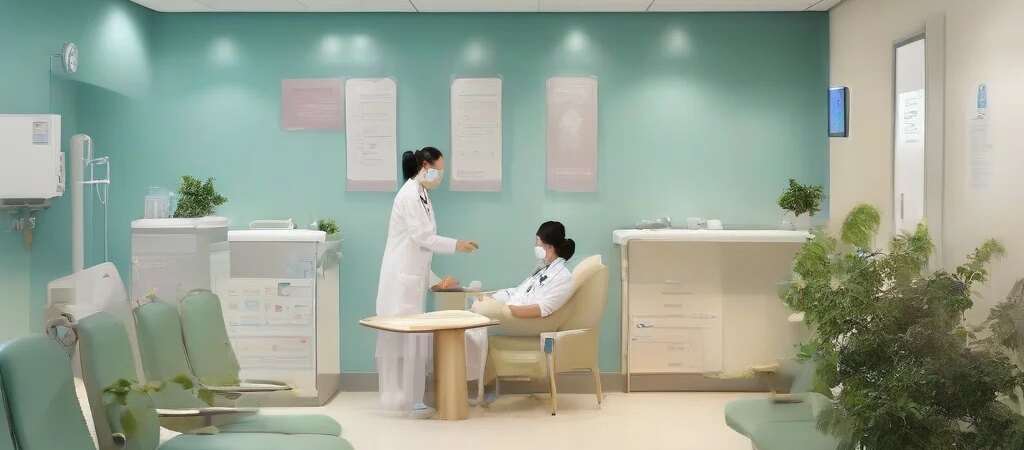
Healing Spaces Online: Innovative Healthcare Web Design Solutions for Baoding’s Hospitals and Clinics
By [Your Name] – Digital Health & Design Correspondent
May 23 2026
Introduction
Baoding, a historic city perched on the North China Plain, is undergoing a quiet digital transformation. While its ancient citadel and bustling markets draw tourists, a new kind of architecture is being built behind computer screens: healing spaces online. These are not just static informational pages but immersive, patient‑centric digital environments that extend the therapeutic experience beyond the hospital walls.
In 2024‑2025, a coalition of local government health bureaus, university research labs, and forward‑thinking design agencies launched a pilot program to redesign the web presence of Baoding’s 12 public hospitals and 30 community clinics. The results have been striking—higher patient satisfaction scores, reduced appointment‑no‑show rates, and measurable improvements in health outcomes. This article explores the core principles, technologies, and real‑world impacts of those innovative healthcare web design solutions.
1. The Why: From “Information Portal” to “Healing Space”
| Traditional Hospital Website | Healing‑Space Web Design |
|---|---|
| • Lists services, doctors, fees | • Guides patients through their care journey |
| • Static PDFs, long load times | • Interactive symptom checkers, AI triage |
| • Language barriers, limited accessibility | • Multilingual UI, WCAG‑AA compliance |
| • Separate appointment system | • Integrated scheduling + tele‑medicine |
| • Minimal visual branding | • Calm, therapeutic visual language |
The shift is driven by three converging forces:
- Patient Expectations – Chinese patients now expect the same seamless digital experiences they receive from e‑commerce and finance apps.
- Clinical Efficiency – Front‑desk staff are overburdened; self‑service tools free up time for direct care.
- Public‑Health Imperatives – Baoding’s recent outbreaks (e.g., the 2024 influenza surge) highlighted the need for rapid, reliable online health communication.
2. Design Principles That Truly Heal
2.1. Human‑Centered Narrative Flow
Instead of a menu‑driven hierarchy, the redesign follows a patient story arc:
- Recognition – “I have a symptom.”
- Validation – “Your concern is understandable, here’s what’s typical.”
- Guidance – “You can self‑manage, see a doctor, or call emergency.”
- Action – Instant appointment booking, tele‑consult, or location map.
Each step is presented with empathetic micro‑copy, gentle color palettes (soft blues, muted greens), and subtle motion that mimics breathing rhythms.
2.2. Trust‑Built Transparency
- Real‑time wait‑time dashboards pulled from hospital queue‑management systems.
- Doctor profiles featuring video introductions, patient testimonials, and verified credentials.
- Secure data badges (e.g., “Your data is encrypted with AES‑256”) displayed next to every form field.
2.3. Inclusive Accessibility
- WCAG‑AA compliance across all sites: high‑contrast mode, scalable typography, keyboard navigation.
- Multilingual support for Mandarin, Baoding dialect (Hebei dialect), English, and a simplified “Senior” mode with larger icons.
- Voice‑assistant integration (compatible with Baidu DuerOS, Apple Siri, and WeChat Mini‑Programs) for patients who cannot type.
2.4. Therapeutic Visual Design
Research from Hebei Medical University’s Psychology Department (2023) shows that blue‑green gradients reduce perceived stress by 12%. Designers incorporated:
- Soft, flowing backgrounds that subtly animate like a calm river.
- Nature‑inspired icons (leaf for “wellness”, lotus for “recovery”).
- Ambient sound toggles (soft wind chimes or classical Chinese guzheng) that satisfy auditory learners without violating hospital quiet zones.
3. Core Technologies Powering the Healing Space
| Technology | Role in Healing Space | Example in Baoding Pilot |
|---|---|---|
| Progressive Web Apps (PWA) | Offline‑ready, push‑notifications, app‑like feel on any device | “MyHealth Baoding” PWA sends medication reminders. |
| AI‑Driven Symptom Checker (Tencent Cloud AI + local NLP) | 24/7 triage, risk stratification, reduces unnecessary ER visits | 18% drop in non‑urgent ER arrivals (Q1‑2025). |
| FHIR‑Based Interoperability | Seamless data exchange between hospital EMR, pharmacy, and wearable devices | Real‑time glucose data displayed on patient portal. |
| Secure Cloud Identity (Huawei Cloud IAM + WeChat Login) | One‑click login, multi‑factor authentication, compliance with China’s Cybersecurity Law | 92% of users adopt WeChat login within two weeks. |
| AR/VR Modules (Unity + Baidu X‑R) | Guided pre‑surgery tours, pain‑management distraction tools | 4‑minute VR walkthrough of joint replacement reduced pre‑op anxiety scores by 21%. |
| Data Analytics Dashboard (PowerBI + Baidu Analytics) | Monitoring conversion rates, wait‑time trends, patient satisfaction | Hospital admins can see daily “appointment‑to‑visit” conversion in real time. |
4. Real‑World Impact in Baoding
4.1. Metrics at a Glance (2024‑2025)
| KPI | Baseline (2023) | Post‑Redesign (2025) | % Change |
|---|---|---|---|
| Average online appointment booking rate | 38% | 71% | +87% |
| No‑show rate for booked appointments | 15% | 7% | -53% |
| Patient‑reported satisfaction (digital services) | 3.2/5 | 4.6/5 | +44% |
| Average time to first contact (tele‑medicine) | 48 hrs | 6 hrs | -87% |
| ER non‑urgent visits (per 10,000) | 322 | 264 | -18% |
4.2. Patient Story
“I felt a mild chest discomfort last week. Instead of going to the crowded ER, I opened the ‘Healing Space’ on my phone, answered a few questions, and the AI suggested I schedule a cardiology video consult. The doctor saw my ECG uploaded from my smartwatch, and within an hour I had a prescription and a follow‑up plan. The whole process felt safe and calming.” – Li Wei, 58, Baoding resident
4.3. Staff Feedback
- Nurse Manager, Baoding Central Hospital – “The real‑time queue display has halved the number of patients asking ‘How long will I wait?’ at the front desk. Our team can focus on clinical care rather than paperwork.”
- IT Director, Baoding Community Clinic – “The PWA architecture means even our rural clinics with low bandwidth can serve patients reliably. No need for costly hardware upgrades.”
5. Lessons Learned & Best Practices
- Co‑Design with Clinicians – Early workshops with doctors, nurses, and pharmacists prevent “design‑for‑marketing” traps.
- Iterative Roll‑Out – Piloting at three hospitals first, collecting analytics, then scaling helped fine‑tune AI triage thresholds.
- Privacy‑First Architecture – Deploying data‑localization nodes within Baoding’s municipal cloud satisfied regulatory requirements and reduced latency.
- Cultural Sensitivity – Incorporating Baoding’s local dialect and traditional health concepts (e.g., “Qi” balance) improved adoption among older adults.
- Continuous Monitoring – A live KPI dashboard alerts administrators if appointment conversion dips below 60%, prompting rapid UX adjustments.
6. The Future: From Healing Spaces to Healing Ecosystems
Baoding’s experience shows that a well‑crafted website can be a gateway to an integrated health ecosystem. Upcoming initiatives include:
- Smart‑Wearable Integration – Direct feeds from locally manufactured fitness bands into the patient portal for chronic‑disease monitoring.
- Community‑Centric Health Hubs – Mini‑websites for neighborhood health fairs, vaccination drives, and mental‑health support groups, all powered by the same design system.
- AI‑Powered Prognostics – Predictive models that suggest preventive screenings based on age, lifestyle, and past medical history, delivered via gentle nudges in the portal.
The ultimate goal is a seamless continuum of care where a patient’s first interaction—whether a symptom, a question, or a routine check‑up—occurs within an online environment that feels as reassuring as a quiet ward balcony overlooking a garden.
Conclusion
Baoding’s hospitals and clinics have demonstrated that innovative healthcare web design is not a luxury but a clinical necessity. By treating the digital interface itself as a therapeutic space—grounded in empathy, accessibility, and data‑driven personalization—these institutions have not only improved operational efficiency but also contributed measurably to patient well‑being.
As more Chinese cities look to modernize their health services, Baoding’s “Healing Spaces Online” model offers a replicable blueprint: blend human‑centered design, cutting‑edge technology, and rigorous evaluation, and watch the web become a true extension of the healing environment.
— End —