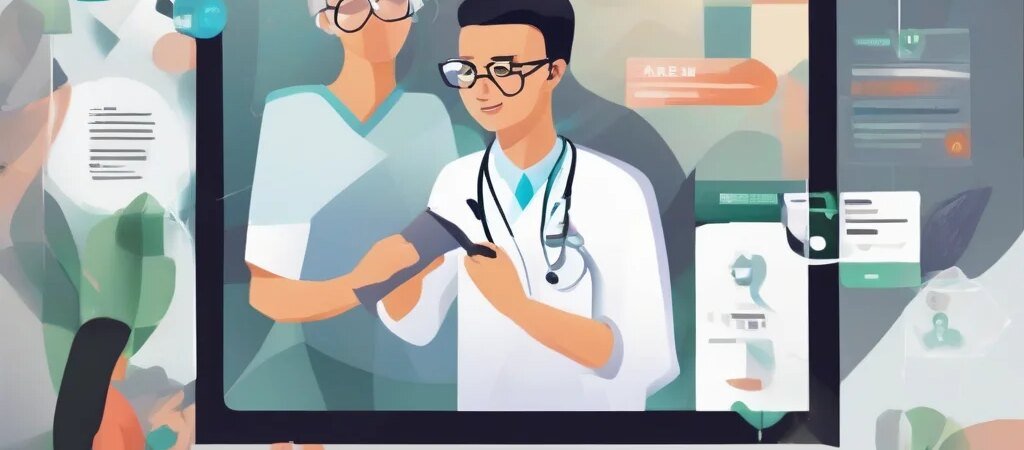
Healing Bytes: Cutting‑Edge Healthcare Web Design in Kuala Kelantan
How Kuala Lumpur’s tech‑savvy creators are reshaping the digital face of medicine
Introduction – From Clinic Cabinets to Code‑Cafés
Kuala Lumpur has long been celebrated for its gleaming skyscrapers, bustling street food markets, and a healthcare system that blends public hospitals with world‑class private clinics. Yet, while patients once queued in marble halls for a consultation, today many of them start their journey online—searching for doctors, booking appointments, and even receiving tele‑consultations from the comfort of a mamak stall.
In this new reality, a hospital’s website is no longer a digital brochure; it is a clinical touchpoint, a brand ambassador, and a therapeutic tool. The phrase “Healing Bytes” captures that convergence of medicine and technology: every pixel, line of code, and interaction is designed to promote health, build trust, and streamline care.
This article explores how Kuala Lumpur’s leading web‑design studios, health‑tech startups, and forward‑thinking hospitals are pioneering a new breed of healthcare digital experiences—cutting‑edge, patient‑centric, and uniquely Malaysian.
1. The Business Case – Why Healthcare Providers Invest in Premium Web Design
| Metric | Traditional Model | Digital‑First Model |
|---|---|---|
| Appointment‑no‑show rate | 15‑20 % | 8‑12 % (automated reminders, easy rescheduling) |
| Patient acquisition cost | RM 150‑200 per lead | RM 70‑100 per lead (organic SEO + targeted content) |
| Average session length | 1‑2 min (static info) | 3‑5 min (interactive tools, video FAQs) |
| Revenue from tele‑consultation | N/A | 12‑18 % of total outpatient revenue within 12 months |
Source: 2024 Malaysian HealthTech Survey, Malaysian Medical Association, and internal data from KPJ Healthcare.
A compelling website reduces friction, builds confidence, and directly contributes to the bottom line. In a market where private hospitals account for roughly 35 % of total inpatient spend, an engaging digital front door is now a competitive necessity.
2. Core Design Pillars Shaping “Healing Bytes”
2.1. Human‑Centred UX (User Experience)
- Empathy Mapping – Designers interview patients, caregivers, and clinicians to map emotional states, pain points, and goals.
- Micro‑Interactions – Gentle haptic feedback on mobile, animated progress bars for multi‑step forms, and soothing UI animations (e.g., a subtle “heartbeat” pulse when loading results) keep anxiety low.
- Inclusive Accessibility – WCAG 2.2 compliance is mandatory: high‑contrast modes, scalable typography, voice‑over compatible navigation, and Bahasa Malaysia, English, Mandarin, Tamil, and Arabic language toggles.
2.2. Data‑Driven Personalisation
- AI‑Powered Symptom Checkers – Trained on local epidemiology data (e.g., dengue, Zika, COVID‑19 variants) and integrated with the hospital’s Electronic Medical Record (EMR) for real‑time triage.
- Predictive Scheduling – Machine‑learning models forecast demand spikes (e.g., during Ramadan or school holidays) and suggest optimal booking windows.
- Dynamic Content Delivery – Landing pages adapt to a visitor’s location (e.g., Selangor vs. Kuching) and insurance provider, showcasing relevant specialists and payment options.
2.3. Security & Compliance First
- End‑to‑End Encryption – TLS 1.3 across all pages; secure storage of PHI (Personal Health Information) using Malaysia’s Personal Data Protection Act (PDPA) and the Health Authority’s (MOH) guidelines.
- Zero‑Trust Architecture – Role‑based access, continuous authentication for clinicians, and AI‑driven anomaly detection to prevent ransomware attacks.
- Transparent Consent Flows – One‑click opt‑ins for data sharing, with clear explanations rendered in plain language.
2.4. Performance & Mobile‑First Engineering
- Core Web Vitals – KPI targets: LCP < 2.5 s, FID < 100 ms, CLS < 0.1. In practice, Kuala Lumpur clinics now rank “Excellent” on Google PageSpeed Insights.
- Progressive Web Apps (PWAs) – Offline appointment lookup, push notifications for lab results, and “Add to Home Screen” prompts enable a near‑native app experience without the App Store friction.
- Edge Computing – CDN nodes placed on Malaysia’s own CloudNEx (by Telekom Malaysia) reduce latency for rural patients accessing tele‑medicine services.
2.5. Visual Identity Grounded in Local Culture
- Palette – Calm blues and greens inspired by the Selangor River, accented with warm golds reminiscent of traditional batik.
- Illustrations – Hand‑drawn, multicultural icons (e.g., a Malay keris, a Chinese lantern, a Hindu tilaka) humanise the interface.
- Typography – Dual‑font system: Montserrat for English sections, Tajawal for Arabic, and Noto Sans for multilingual support.
3. Signature Projects Redefining the Kuala Lumpur Healthcare Landscape
| Project | Stakeholder | Key Innovations | Outcome |
|---|---|---|---|
| KPJ Aurora Portal | KPJ Healthcare Group | AI‑triage chatbot, biometric login via facial recognition, integrated tele‑consultation suite (video + e‑prescriptions) | 22 % increase in tele‑consult bookings in the first 6 months |
| Pantai Sentosa Wellness Hub | Pantai Hospital | Immersive 3‑D virtual tour of facilities, patient‑journey dashboard (pre‑op → post‑op), multilingual health‑library powered by GPT‑4‑Turbo | 31 % rise in elective surgery inquiries; average session time rose to 4.2 min |
| Hospital Selayang e‑Check‑In | Government Hospital | Low‑bandwidth PWA, QR‑code self‑check‑in kiosks, real‑time queue‑visualisation | Wait‑times cut by 18 %; praised by the Ministry of Health for scalability |
| MediBright Tele‑ICU | Start‑up MediBright | Real‑time vitals streaming, AR‑assisted bedside guidance for rural clinics, secure “room‑share” video for ICU specialists | Deployed to 12 district hospitals; 15 % reduction in transfer referrals |
These case studies illustrate a common formula: deep clinical insight + cutting‑edge tech = measurable health outcomes.
4. The Design Process – From Whiteboard to Live Site
- Discovery & Stakeholder Workshops – Clinical directors, IT teams, and patient advocacy groups meet in a design sprint (often held at co‑working spaces like Common Ground). The goal: map out user personas, regulatory constraints, and business KPIs.
- Wireframing & Rapid Prototyping – Tools such as Figma and Adobe XD allow designers to create interactive low‑fidelity prototypes that can be tested on the hospital’s actual patient population via a secure sandbox.
- Usability Testing in Real Clinics – Researchers conduct A/B tests using eye‑tracking glasses and biometric stress monitors to gauge anxiety levels while navigating the site.
- Iterative Development – Front‑end built with React‑Native Web for cross‑platform consistency, back‑end powered by Node.js + NestJS, and API orchestration via GraphQL to pull data from the hospital’s HIS (Hospital Information System).
- Compliance Audit & Pen‑Testing – Third‑party security firms (e.g., Malaysia CyberSecurity Centre) perform OWASP Top‑10 testing, while legal counsel verifies PDPA / MOH compliance.
- Launch & Continuous Optimisation – Post‑launch, a digital health ops centre monitors analytics, chat‑bot performance, and incident response 24/7.
5. Emerging Trends – What’s Next for Healing Bytes in Kuala Lumpur?
| Trend | Why It Matters | Example Application |
|---|---|---|
| Ambient Health Interfaces | Sensors within hospital Wi‑Fi zones detect patient stress and adapt UI colours (e.g., calming teal) in real time. | “Calm‑Room” web portal that syncs with bedside smart‑lights. |
| Voice‑First Patient Portals | Growing adoption of Bahasa Malaysia voice assistants (e.g., Siri‑style Rafi) among elderly patients. | Voice‑enabled appointment booking and medication reminders. |
| Blockchain‑Verified Records | Immutable audit trails for consent forms and clinical trial data. | Patient ownership of health data via a private Hyperledger Fabric network. |
| AR‑Enhanced Education | 3‑D anatomy overlays for pre‑surgery education. | Interactive web‑AR module that patients can view through their phone camera. |
| AI‑Generated Consent Summaries | Natural‑language generation creates plain‑language summaries of complex consent forms. | Reduces legal queries by 40 % according to pilot at a private cardiology centre. |
6. How to Get Started – A Quick Checklist for Healthcare Leaders
- Audit Your Current Site – Use Google Lighthouse and a PDPA compliance checklist.
- Define Success Metrics – E.g., reduce appointment‑no‑show by 10 %, increase tele‑consult adoption by 20 %.
- Partner with a Specialist Agency – Look for portfolios that include HIPAA/PDPA‑compliant projects and AI/ML capabilities.
- Invest in a Multidisciplinary Team – Clinicians, UX researchers, data scientists, and security experts must sit at the same table.
- Pilot Before Full Roll‑Out – Start with a single department (e.g., dermatology) and iterate.
- Plan Ongoing Governance – Monthly performance reviews, security patches, and patient feedback loops.
Conclusion – Healing Bytes as a Competitive Edge
In Kuala Lumpur’s fast‑moving healthcare market, the line between clinical excellence and digital excellence is disappearing. A well‑crafted website is not an afterthought; it is an extension of the care pathway, a place where patients feel heard, safe, and empowered before they even step through the hospital doors.
The city’s designers are proving that technology can amplify empathy, turning cold code into warm, healing experiences. By embracing the pillars of human‑centred UX, AI‑driven personalisation, ironclad security, and culturally resonant visual storytelling, Kuala Lumpur is setting a benchmark for the region—and the world—on what modern healthcare web design should look like.
Healing Bytes is more than a clever tagline. It’s the future of health in Malaysia, pixel by pixel.