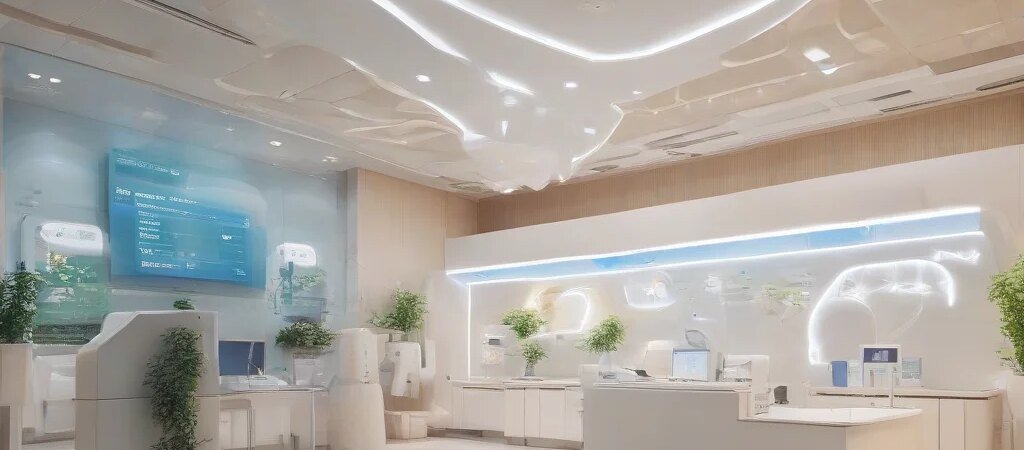
Healing Digital Spaces: Innovative Healthcare Web Design for Jining’s Medical Community
By [Your Name], Guest Contributor – May 2026
Introduction – Why the Internet Is the New Waiting Room
In the bustling city of Jining, Shandong Province, the hospital corridors are often packed, appointment slots fill up weeks in advance, and patients still rely on paper‑based forms and telephone triage. Yet the same city boasts a rapidly expanding digital infrastructure: 5G coverage now reaches every district, smartphone penetration exceeds 92 % and the local government’s “Smart City” initiative has already digitized public transport, utilities and education.
The gap between Jining’s tech‑savvy population and its conventional healthcare delivery model is therefore glaring—and it is exactly where innovative web design can step in. A well‑crafted healthcare website is no longer a static brochure; it is a healing digital space that guides patients, supports clinicians, and enhances the overall health ecosystem.
Below, we outline the core principles, cutting‑edge features, and practical implementation steps that can transform a generic medical site into a patient‑centric, data‑driven platform for Jining’s medical community.
1. Human‑Centered Design: Empathy Meets Efficiency
| Traditional Site | Healing Digital Space |
|---|---|
| Dense text, navigation hidden in menus | Clean visual hierarchy, large touch‑friendly buttons |
| One‑size‑fits‑all language | Multilingual support (Mandarin, Jinyu dialect, English) |
| Fixed layout, no personalization | Adaptive UI that greets users by name, shows relevant services |
Key Tactics
-
Personas & Journey Mapping – Develop three core personas:
- “Elderly Li” (70 y, limited tech skills, chronic hypertension)
- “Young Mom Chen” (28 y, multitasking parent, needs pediatric appointments)
- “Dr. Wang” (45 y, busy specialist, requires fast access to patient records).
Map each persona’s typical tasks (searching for a specialist, uploading lab results, ordering medication) and identify friction points.
-
Accessible UI – Follow China’s National Standard GB/T 37612‑2020 for Web Accessibility:
- Minimum contrast ratio 4.5:1
- Text scaling up to 200 %
- Voice‑over support for the visually impaired.
-
Micro‑Interactions – Use subtle animations (e.g., a heartbeat icon that pulses when a new test result is available) to reassure users that the system is responsive.
2. Mobile‑First, Yet Multi‑Device Ready
Jining’s residents spend an average of 5 hours per day on mobile devices, but hospitals still depend on desktop‑bound internal systems. A mobile‑first approach ensures the most common user journey—booking an appointment on a smartphone—is flawless, while still delivering a rich experience on tablets, smart TVs in waiting rooms, and desktop kiosks.
- Progressive Web App (PWA) – Gives offline cache for emergency health tips, push notifications for appointment reminders, and “Add to Home Screen” capability without the overhead of a native app.
- Responsive Grid – 12‑column layout that collapses gracefully from 1920 px monitors down to 320 px phone screens.
- Device‑Specific Optimizations – Leverage 5G bandwidth for high‑resolution medical imagery (e.g., MRI scans) on tablets, while serving compressed SVG icons on low‑end phones.
3. Integrated Tele‑Health Suite
A modern healthcare website for Jining must act as the central hub for all remote care services.
| Feature | Patient Benefit | Technical Implementation |
|---|---|---|
| Video Consultations (HD, encrypted) | See a doctor without traveling 20 km to the city hospital | WebRTC + Tencent Cloud Real‑Time Communication (TRTC) for low‑latency streams |
| AI Symptom Checker (AI‑trained on Chinese clinical data) | 24/7 triage, reduces unnecessary ER visits | TensorFlow Lite models hosted on Alibaba Cloud Function Compute |
| Secure Messaging (E‑signature, prescription transmission) | Faster follow‑up, medication adherence | End‑to‑end encryption (SM2/SM4) per Chinese cryptography standards |
| Remote Monitoring Dashboard (integrates wearables, home BP cuffs) | Real‑time chronic disease management | MQTT broker + Grafana for visual trends |
All modules must comply with the Personal Information Protection Law (PIPL) and Health Information Security Technical Specification (WS‑245‑2023).
4. Data‑Driven Personalization
-
Dynamic Health Portals – Once a patient logs in, the homepage surfaces the most relevant actions: upcoming appointments, medication refill alerts, personalized health articles (e.g., “Managing Diabetes during Jining’s Winter”).
-
Predictive Analytics – Using anonymized data from the municipal health bureau, the system can forecast seasonal spikes (e.g., flu in spring) and push proactive outreach campaigns.
-
Location‑Aware Services – By detecting a user’s GPS (with consent), the site can suggest the nearest clinic with real‑time queue length, or guide patients to the quickest public‑transport route via the Jining Smart Transit API.
5. Seamless Integration With Hospital Information Systems (HIS)
Jining’s hospitals typically run legacy HIS platforms (e.g., Wondersoft Med or iSoft Clinical). A service‑oriented architecture (SOA) bridges the gap:
- API Gateway – Expose RESTful endpoints for patient demographics, appointment scheduling, and lab results. Use OpenAPI 3.0 for documentation.
- Master Data Management (MDM) – Ensure a single source of truth for patient identifiers across public hospitals, community health centers and private clinics.
- FHIR Compatibility – Adopt the HL7 FHIR (Fast Healthcare Interoperability Resources) standard to future‑proof data exchange, especially for potential integration with national health records.
6. Trust‑Building Visual & Content Strategies
Healthcare decisions hinge on trust. The site’s visual language must convey competence and compassion:
- Color Palette – Soothing blues and greens inspired by Jining’s ancient waterways, paired with warm accent tones for call‑to‑action buttons.
- Human Imagery – Real photos of Jining doctors, nurses, and patients (with consent) rather than stock images, reinforcing community identity.
- Transparent Information Architecture – Clearly display certifications, privacy policies, and physician credentials (including the “Doctor’s License” number linked to the provincial regulator).
Content should be SEO‑optimized for local search (e.g., “济宁儿科预约”, “Jining telehealth”) and include structured data (Schema.org MedicalOrganization, Physician) to improve discoverability on Baidu and Google.
7. Security & Compliance – The Bedrock of Healing Spaces
| Threat | Countermeasure |
|---|---|
| Data breach (PHI leakage) | AES‑256 encryption at rest, SM2/SM4 for data in transit, regular penetration testing |
| Unauthorized access | Multi‑factor authentication (SMS OTP + facial recognition via WeChat Mini‑Program) |
| Malware / ransomware | Immutable backups on a separate VPC, daily snapshots, AI‑driven threat detection |
| Compliance audit failures | Automated compliance checks via Alibaba Cloud Compliance Center; logs stored for ≥ 7 years per PIPL |
Implement a Zero‑Trust Network Architecture (ZTNA): every request—whether from a bedside tablet or a patient’s phone—must be authenticated, authorized, and encrypted.
8. Implementation Roadmap for Jining’s Health Authorities
| Phase | Duration | Deliverables |
|---|---|---|
| Discovery & Research | 2 months | Stakeholder interviews, persona maps, technical audit of existing HIS |
| Design Sprint | 1 month | Wireframes, high‑fidelity mockups, usability testing with 30 local patients |
| MVP Development | 3 months | PWA core, appointment engine, secure login, basic tele‑health (video + chat) |
| Integration & Data Migration | 2 months | API gateway, FHIR adapters, MDM sync |
| Beta Launch & Feedback Loop | 1 month | Pilot in two community health centers, analytics dashboards |
| Full Roll‑Out & Training | 2 months | System‑wide deployment, staff workshops, public awareness campaign |
| Continuous Improvement | Ongoing | Quarterly UI refreshes, AI model retraining, security patches |
A total timeline of ≈ 11 months is realistic for a city‑wide rollout, especially if the municipal IT department partners with a local tech incubator (e.g., Jining Digital Health Lab).
Conclusion – From Pixels to Patient Wellness
Healing Digital Spaces are more than sleek graphics; they are strategic ecosystems where design, technology, and community converge. For Jining, a thoughtfully engineered healthcare website can:
- Cut waiting times by up to 30 % through online triage and self‑service.
- Improve chronic disease outcomes via remote monitoring dashboards that alert clinicians before a crisis occurs.
- Strengthen public trust by delivering transparent, secure, and culturally resonant experiences.
By embracing human‑centered design, mobile‑first performance, tele‑health integration, and rigorous data security, Jining’s medical community can set a benchmark for smart‑city healthcare across China—and, ultimately, give every citizen a more humane, accessible path to wellness.
Ready to start the transformation? The first line of code begins the moment the community’s voice is heard. Let’s build a digital clinic that heals as powerfully as the hands that work within Jining’s walls.