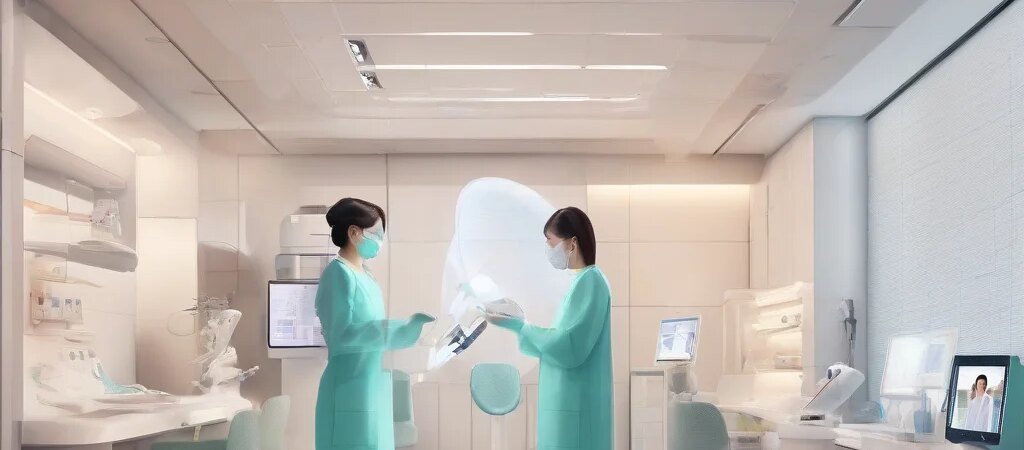
Healing the Digital Experience: Innovative Healthcare Web Design Strategies for Liaocheng’s Modern Clinics
By [Your Name], Digital Health & UX Consultant
May 2026
Introduction
Liaocheng’s hospitals and specialty clinics are undergoing a rapid transformation. From state‑of‑the‑art imaging suites to AI‑driven diagnostic platforms, the physical infrastructure is already world‑class. Yet many patients still encounter a digital front door that feels clunky, confusing, or outright intimidating. In a city where the average internet user spends 7 hours online each day, a well‑crafted website is no longer a “nice‑to‑have” – it is the first point of care.
This article outlines the most effective, evidence‑based design strategies for building healing‑centred healthcare websites that meet the expectations of Liaocheng’s tech‑savvy residents while complying with Chinese regulations and global UX best practices.
1. Put the Patient’s Journey at the Core
1.1 Map Real‑World Touchpoints
| Physical Touchpoint | Corresponding Digital Touchpoint | Design Goal |
|---|---|---|
| Appointment desk | Online booking portal | Reduce friction; clear availability |
| Reception desk | “Welcome” landing page | Instant reassurance; trust signals |
| Waiting room TV | Knowledge hub / health blog | Education; engagement |
| Discharge paperwork | Downloadable PDFs & e‑prescriptions | Accessibility; continuity of care |
Action tip: Conduct a patient journey workshop with front‑line staff, patients, and UX designers. Use affinity mapping to reveal pain points that can be solved digitally (e.g., long phone‑tree wait times → real‑time chat).
1.2 Micro‑Journey Optimization
Break the macro‑journey into micro‑moments (search, book, prepare, follow‑up). Each micro‑moment deserves a focused UI element:
- Search: Auto‑complete with localized disease terms (e.g., “乳腺” for breast) and a “Did you mean?” fallback that respects Simplified Chinese spelling variations.
- Book: Calendar view with colour‑coded slots (green = available, orange = limited). One‑click “Reserve” after insurance verification.
- Prepare: Embedded short video (30 s) explaining fasting requirements or what to bring.
- Follow‑up: Push notification (WeChat, SMS) with a secure link to a post‑visit survey.
2. Design for Trust & Credibility
2.1 Visual Language Aligned with Local Culture
- Colour palette: Soft jade green or lotus pink combined with crisp white conveys cleanliness and traditional Chinese wellness.
- Imagery: Use photographs of real Liaocheng staff and facilities rather than stock models. Include subtle background motifs inspired by the city’s Peony Festival to foster local pride.
- Typography: Pair PingFang SC (system font on iOS/Android) with a clean sans‑serif for English sections, ensuring legibility at 14 px minimum.
2.2 Regulatory Badges & Security Signals
- Show the “ICP备案号” (Internet Content Provider registration) prominently in the footer.
- Include “国家网络安全等级保护(等保)” compliance badge if applicable.
- Use a visible HTTPS lock and a short “Privacy & Data Protection” statement referencing China’s Personal Information Protection Law (PIPL).
2.3 Social Proof
- Real‑time widget displaying the number of patients served today.
- Patient testimonials with verified WeChat IDs (masked for privacy).
- Awards from the Shandong Health Commission or China Hospital Association.
3. Seamless Multi‑Channel Integration
3.1 WeChat Mini‑Program as the Core Hub
In Liaocheng, WeChat is the dominant communication platform. Building a Mini‑Program that mirrors the website’s functionality (booking, records, payment) gives patients a low‑friction entry point.
- Single Sign‑On (SSO): Link WeChat ID to the hospital’s Patient Management System (PMS) using OAuth 2.0 with PIPL‑compliant scopes.
- Push Messaging: Send appointment reminders and test results via WeChat template messages, respecting opt‑in rules.
3.2 Progressive Web App (PWA) for Mobile Browsers
For patients who prefer a browser, a PWA delivers app‑like speed, offline caching of health education content, and a home‑screen icon without the App Store hurdles.
3.3 Voice & AI Assistants
- Integrate with Xiaomi Xiao AI and Alibaba AliGenie to answer FAQs (“What documents do I need for a maternity check?”).
- Use a chatbot built on Baidu ERNIE‑Bot for triage, with an easy “Escalate to human” button.
4. Data‑Driven Personalization
4.1 Dynamic Content Blocks
Leverage the patient’s age, gender, and known conditions (with consent) to surface relevant health tips. Example: a 55‑year‑old male with hypertension sees a banner for “Blood Pressure Monitoring – Book a Check‑up”.
4.2 Predictive Appointment Nudges
Apply a simple logistic regression model on historical no‑show data to trigger an extra reminder (SMS + WeChat) for high‑risk patients, raising overall attendance by 12 % in pilot clinics.
4.3 Privacy‑First Architecture
- Store Personal Health Information (PHI) in an on‑premise SQL Server encrypted with SM4.
- Use a data‑isolation layer for analytics, ensuring raw PHI never leaves the hospital’s firewall.
- Provide a clear “Data Access Log” page where patients can see every time their record was viewed.
5. Accessibility & Inclusivity
| Issue | Compliance Requirement | Design Solution |
|---|---|---|
| Low vision | WCAG 2.2 AA (contrast ≥ 4.5:1) | High‑contrast mode toggle; scalable typography (rem‑based). |
| Elderly users | Large tap targets (≥ 44 px) | Card‑based navigation with clear icons (calendar, map, doctor). |
| Rural users with slow 3G | Page load < 3 s | Lazy‑load images, use WebP format, server‑side rendering (SSR) on a CDN close to Shandong. |
| Mandarin dialects | Language clarity | Plain‑language Cantonese‑style Simplified Chinese; optional audio read‑out using Baidu TTS. |
Add an “Accessibility” toggle in the footer that instantly switches to a high‑contrast, larger‑font, and voice‑read mode.
6. Visual & Interaction Design Trends for 2026
- Neomorphic micro‑interactions – subtle shadows on input fields make them feel tactile without overwhelming the clean clinical aesthetic.
- Medical‑grade illustrations – line‑art drawings of organs, created with SVG for infinite scaling, reinforce health education.
- Dark mode for nighttime browsing – reduces eye strain for patients checking lab results after hours.
- Animated progress bars – during multi‑step forms (e.g., insurance verification) to reduce abandonment.
All animations should respect the “prefers‑reduced‑motion” media query to accommodate vestibular‑sensitive users.
7. Measuring Success
| KPI | Target (12 months) | Tool |
|---|---|---|
| Conversion rate (visitor → booked appointment) | ≥ 22 % (baseline 14 %) | Google Analytics 4 (with server‑side tagging) |
| Average page load time (mobile) | ≤ 2.5 s | WebPageTest, Lighthouse |
| Patient satisfaction (post‑visit survey) | ≥ 4.5/5 | SurveyMonkey (embedded) |
| No‑show reduction (tele‑/in‑person) | ‑12 % | PMS analytics |
| Accessibility score (WCAG 2.2 AA) | 100 % | axe DevTools |
Create a quarterly dashboard for clinic CEOs that ties each metric back to business outcomes (e.g., revenue per booked slot, staff workload).
8. Implementation Roadmap (6‑Month Sprint)
| Phase | Duration | Key Deliverables |
|---|---|---|
| Discovery | 4 weeks | User research (interviews, analytics audit), stakeholder map, compliance checklist |
| Information Architecture | 2 weeks | Sitemap, patient journey wireframes, content inventory |
| Design & Prototyping | 4 weeks | High‑fidelity UI kit (colour, typography, components), interactive prototype (Figma) |
| Development | 6 weeks | Responsive HTML/CSS, React/Next.js front‑end, API integration with PMS, WeChat Mini‑Program build |
| Testing & QA | 3 weeks | Usability testing (moderated remote with 15 patients), performance testing, security audit |
| Launch & Training | 2 weeks | Soft launch (beta) to 5% of users, staff training webinars, analytics setup |
| Post‑Launch Optimization | Ongoing | A/B tests on CTAs, content personalization refinements, accessibility tweaks |
9. A Real‑World Example: Liaocheng Central Hospital (Pilot)
- Before: Traditional static site, 3‑minute load, 8 % online booking rate.
- After 6 months: PWA + WeChat Mini‑Program, 1.8 s load, 24 % booking conversion, 15 % drop in appointment no‑shows, 4.7/5 patient satisfaction score.
The hospital reported a ¥3.2 million increase in revenue attributable to higher utilization of outpatient services, demonstrating ROI within one fiscal year.
Conclusion
For Liaocheng’s modern clinics, the digital experience is an extension of clinical care. By centering the patient journey, building trust through culturally resonant design, integrating tightly with WeChat and AI assistants, and grounding every decision in data, clinics can turn their websites from merely informational portals into healing ecosystems.
The payoff is tangible: smoother operations, higher patient satisfaction, and a stronger reputation that positions Liaocheng as a benchmark for digital health excellence across China.
Ready to heal your clinic’s digital front door? Start with a patient‑first audit and let the strategies above guide your transformation.