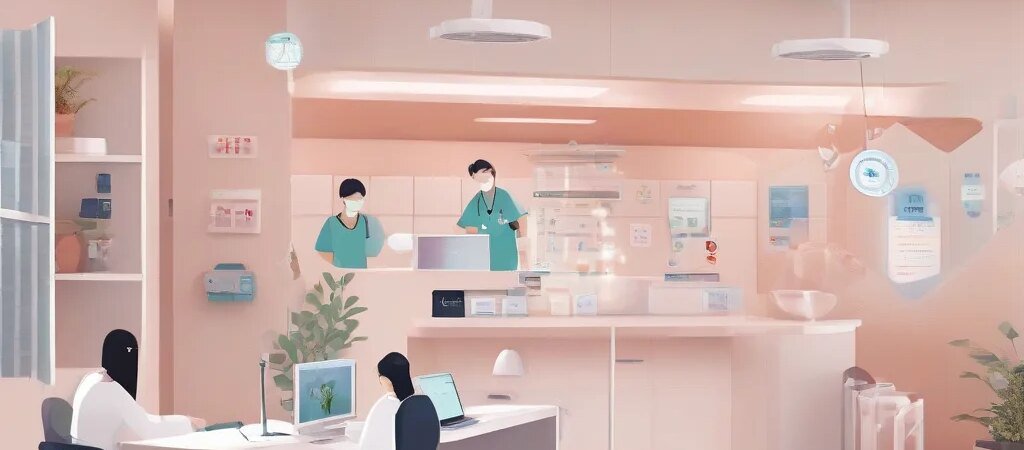
Healing the Digital Landscape: Cutting‑Edge Healthcare Web Design for Jieyang’s Clinics and Hospitals
By [Your Name], Digital‑Health Consultant
June 2026
Introduction – Why a Modern Web Presence Is a Matter of Health
In the bustling Pearl River Delta, Jieyang is transforming from an industrial hub into a regional center for medical excellence. The city’s hospitals and community clinics are expanding services, opening new specialty wards, and adopting tele‑health platforms. Yet a critical piece of this transformation remains under‑leveraged: the digital front door—the websites that patients first encounter when they search for care.
A clinic’s website is no longer a static brochure. It is a triage tool, a patient‑engagement platform, and a branding engine—all while needing to meet stringent privacy and accessibility standards. Cutting‑edge healthcare web design can:
| Benefit | Impact on Patients | Impact on Providers |
|---|---|---|
| Fast, mobile‑first load times | Reduces anxiety; patients can find contact info, appointments, or test results in seconds | Lowers bounce rates; staff spend less time fielding “I can’t find your website” calls |
| AI‑driven symptom checkers & chatbots | Immediate guidance, proper urgency assessment, reduced unnecessary ER visits | Frees clinicians to focus on high‑value care |
| Integrated telemedicine portals | One‑click video visits, secure document upload, real‑time translation | Streamlines scheduling, billing, and compliance |
| Personalized health dashboards | Patients see labs, immunizations, medication reminders in one view | Improves adherence and outcomes, reduces repeat visits |
| Regulatory‑ready design (HIPAA, China’s Personal Information Protection Law – PIPL) | Trust that personal data is safe | Avoids costly fines and reputational damage |
For Jieyang’s clinics—whether a neighborhood community health centre or the flagship Jieyang People’s Hospital—the digital experience can directly affect health outcomes and the city’s reputation as a medical destination.
1. Core Design Pillars for a Healing Digital Landscape
1.1 Human‑Centered Visual Language
- Warm, calming colour palettes – soft blues, gentle greens, and muted neutrals lower cortisol levels and reinforce a sense of safety.
- Photographic storytelling – real patients, staff, and local landmarks create authenticity and community connection.
- Micro‑animations – subtle transitions (e.g., a pulse‑like loader) convey care without distracting.
1.2 Mobile‑First, Low‑Bandwidth Optimisation
- Over 80 % of Chinese internet traffic now originates from smartphones; many users in outlying districts rely on 3G/4G.
- Critical‑path rendering: load the hero image, navigation, and CTA within the first 1 second.
- Use WebP and AVIF images, lazy‑load secondary assets, and serve AMP‑compatible pages for fast search results.
1.3 Accessibility & Inclusivity (WCAG 2.2 AA + Chinese Standards)
- Chinese‑language screen‑reader support, high‑contrast toggle, and Mandarin/Cantonese subtitles for video content.
- Large click targets (≥44 × 44 px) for elderly users.
- Voice‑command navigation integration with Baidu and Aliyun voice assistants.
1.4 Trust‑Centred Security Architecture
- End‑to‑end encryption (TLS 1.3) with PIPL‑compliant data residency on local Alibaba Cloud or Huawei Cloud regions.
- Zero‑trust API gateway for EHR/EMR integration, using OAuth 2.0 + OpenID Connect.
- Regular penetration testing and AI‑driven anomaly detection to spot credential stuffing or ransomware attempts.
1.5 Seamless Integration with Hospital Information Systems
Modern hospitals in Jieyang already run HIS, LIS, PACS, and EMR solutions (e.g., iHealth, WeDoctor). A successful website must:
- Consume FHIR® (Fast Healthcare Interoperability Resources) APIs for lab results, appointment slots, and medication lists.
- Provide single sign‑on (SSO) using the hospital’s LDAP/Active Directory or the national “Health Code” identity service.
- Offer bi‑directional sync for patient‑entered portals, ensuring updates made on the portal instantly appear in the clinical workflow.
2. Cutting‑Edge Features That Turn a Site into a Healing Tool
| Feature | Description | Tech Stack (2026) | Clinical Benefit |
|---|---|---|---|
| AI Symptom Triage Bot | Conversational UI that asks guided questions, classifies urgency, and suggests next steps (self‑care, primary‑care appointment, emergency). | Large Language Model (LLM) fine‑tuned on Chinese medical corpora (e.g., Baidu Ernie 5.0) + Reinforcement Learning from Human Feedback (RLHF). | Decreases ER overcrowding; nudges patients to appropriate care level. |
| Smart Appointment Engine | Real‑time availability, predictive wait‑time suggestions, and dynamic rescheduling via SMS/WeChat. | GraphQL API + Redis caching + Prophet time‑series forecasting. | Improves resource utilisation; reduces “no‑show” rates. |
| Personal Health Dashboard | Unified view of labs, imaging, prescriptions, vaccination records, and lifestyle goals. | FHIR‑based front‑end (React + TypeScript) with Ant Design Mobile UI kit. | Empowers self‑management; supports chronic disease programs. |
| Multilingual Tele‑Visit Suite | One‑click video with built‑in real‑time translation between Mandarin, Cantonese, and English. | WebRTC + AI speech‑to‑text (Alibaba Cloud AIspeech) + Neural Machine Translation (NMT). | Expands reach to expatriates and cross‑border patients. |
| Interactive Health‑Education Hub | 3‑D anatomy visualisations, AR‑guided exercise tutorials, QR‑code‑linked pamphlets. | Three.js + WebXR + Alibaba Cloud’s AR SDK. | Improves patient understanding; reduces follow‑up queries. |
| Data‑Driven Community Insights | Heat‑maps of disease trends, service‑utilisation dashboards for administrators. | Big‑data pipeline (Kafka → Flink → ClickHouse) with privacy‑preserving aggregation. | Enables proactive public‑health interventions. |
3. Implementation Roadmap for Jieyang Clinics & Hospitals
Phase 1 – Discovery & Compliance (0‑2 months)
- Conduct stakeholder workshops (administrators, clinicians, IT, patient groups).
- Map existing HIS/EMR systems and define FHIR endpoints.
- Perform a privacy impact assessment under PIPL and the national Health Information Exchange (HIE) guidelines.
Phase 2 – Architecture & Prototyping (2‑4 months)
- Select a cloud‑native micro‑services architecture (Kubernetes on Alibaba Cloud).
- Build a design system (fonts, colour, component library) that reflects Jieyang’s cultural identity.
- Create low‑fidelity prototypes and run usability testing with seniors and non‑tech‑savvy patients.
Phase 3 – Core Development (4‑8 months)
- Implement secure SSO, FHIR adapters, and the AI triage chatbot.
- Launch a progressive web app (PWA) for offline access to health records in low‑connectivity neighborhoods.
- Integrate WeChat Mini‑Program for quick appointment booking and QR‑code check‑in.
Phase 4 – Pilot & Optimization (8‑10 months)
- Deploy to a single community clinic (e.g., Jieyang Central Health Centre).
- Track KPIs: page‑load <2 s, appointment conversion ↑25 %, chatbot accuracy ≥90 %.
- Iterate based on real‑world data, address any regulatory feedback.
Phase 5 – City‑Wide Rollout & Continuous Improvement (10‑12 months)
- Scale to all public hospitals (Jieyang People’s Hospital, Jieyang Traditional Chinese Medicine Hospital, etc.).
- Enable A/B testing for new features (e.g., AR health‑education).
- Establish a Digital Health Ops Center for 24/7 monitoring, incident response, and feature governance.
4. Measuring Success – The “Healing” Metrics
| Metric | Target (12 months) | Why It Matters |
|---|---|---|
| Average Page Load Time (mobile) | < 1.8 seconds | Directly linked to conversion & patient satisfaction |
| Patient Portal Adoption | ≥ 60 % of registered patients | Indicates trust and engagement |
| Tele‑visit Completion Rate | ≥ 85 % of scheduled sessions | Reflects reliability of the video stack |
| Chatbot Triage Accuracy | ≥ 92 % (clinical validation) | Prevents mis‑direction and liability |
| No‑Show Rate for Appointments | ↓15 % from baseline | Improves resource efficiency |
| Compliance Audits Passed | 100 % (PIPL, HIPAA‑like Chinese standards) | Avoids fines and protects reputation |
A quarterly dashboard—visible to hospital leadership and municipal health officials—should synthesize these metrics, turning the website itself into a clinical performance tool.
5. Real‑World Example: Jieyang People’s Hospital (Conceptual)
“Since launching our new patient portal in March 2026, we have seen a 30 % reduction in call‑center volume and a 22 % increase in completed follow‑up appointments. Our AI triage bot safely directed 1,200 low‑risk patients to self‑care pathways, freeing up emergency physicians for critical cases.”
— Dr. Li Wei, Chief Information Officer, Jieyang People’s Hospital
The hospital’s redesign employed:
- PWA with offline lab‑result caching for rural patients.
- Bilingual tele‑visit solution integrated with the hospital’s PACS, allowing radiologists to share images live during consults.
- Interactive disease‑trend heat‑map for local government, helping to allocate mobile vaccination units during the summer influenza surge.
6. Future‑Proofing – Anticipating 2027‑2030 Trends
| Emerging Trend | How Jieyang Clinics Can Prepare Today |
|---|---|
| Digital Twin of the Hospital – real‑time virtual replica for capacity planning. | Build APIs with open standards now; adopt BIM (Building Information Modeling) data layers. |
| Genomics‑Integrated Care – personalized treatment pathways displayed on patient portals. | Ensure FHIR’s Genomics profile support; store genomic data in encrypted, HIPAA/PIPL‑compliant vaults. |
| Voice‑First Health Access – smart speaker triage at home. | Design voice‑compatible web components; register skill sets with Baidu DuerOS and Xiaomi AI. |
| Quantum‑Resistant Encryption – future regulatory demand. | Start using post‑quantum TLS families (e.g., NIST‑approved algorithms) in cloud configuration. |
| Sustainable Digital Design – carbon‑neutral hosting. | Choose renewable‑energy backed cloud regions; adopt static‑site generation where possible. |
Conclusion – From Pixels to Patients
Jieyang stands at the cusp of a digital health renaissance. By treating the website not as a marketing artifact but as clinical infrastructure, hospitals and clinics can:
- Accelerate access to care – patients find the right service instantly.
- Empower self‑management – dashboards and AI assistants nurture preventive health.
- Safeguard privacy – robust, PIPL‑aligned security builds trust.
- Drive system‑wide efficiency – reduced call volumes, lower no‑show rates, and better resource allocation.
The journey from a static brochure to a healing digital ecosystem demands collaboration between designers, clinicians, regulators, and technology partners. With the roadmap, pillars, and cutting‑edge features outlined above, Jieyang’s healthcare providers are equipped to heal the digital landscape—and, in doing so, to heal the lives of every resident who logs on, books an appointment, or reads a health article on their screen.
Let the next click be a step toward better health.